Tuesday, November 9, 2010

After the reign of King Henry VII

King Henry VII lived an outstanding campaign along with his wife. Elizabeth of York. Sadly, a year after the death of Arthur(1503), Elizabeth also dies on February 11. She lies buried at Westminster Abbey in the Lady Chapel. Lonely Henry VII lives for another six years but does not marry again. He dies on April 21, 1509. From that day, his only son left, Henry becomes King Henry VIII. Only two of the three children grew up to become monarchs, Henry and Mary Tudor

Resting place of Elizabeth of York
and King Henry VII

The Children of Henry VII

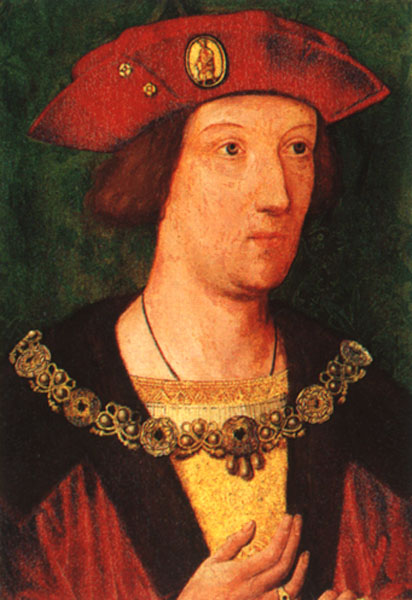
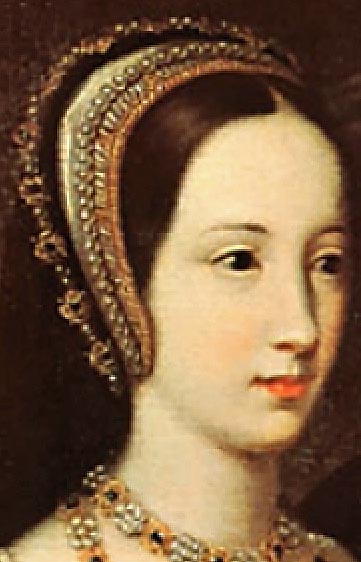
Henry VII and Elizabeth produced three children, Arthur the eldest, Henry who in the future became Henry VIII, and Mary Tudor, the youngest. About five years after the birth of Mary Tudor, Arthur, the Prince of Wales, married Catherine of Aragon. Tragically, the year after, 1502, Arthur dies of some epidemic at Ludlow Castle. Using a papal dispensation later that year, Henry VII’s next son, Henry became the runner-up for the throne. The papal order also stated that Henry would be married to Catherine of Aragon to keep their dowry and political order with Spain. Aragon at the time was on of the largest Spanish kingdoms. So King Henry VII knew that it was crucial to maintain some sort of alliance with them. In the year 1503, Henry VIII marries Catherine of Aragon and upon King Henry VII’s death, Henry VIII succeeds the throne. As for the youngest, Mary Tudor, she ends up being the Queen of France.

King Henry VII's Reign

King Henry VII lived rather a glorious and prideful life. Henry tried to reduce internal dissension and create a strong and powerful monarchial government. Since England did not have a standing army at the time, Henry relied on nobles to commission people for certain missions and when they were finished, they would be released. As king, Henry also fortified the unreliable nobles by creating the Court of Star Chamber which did not use a jury, but torture to get confessions from people. Henry was mostly successful in taking in income from financial resources of England like the crown lands, judicial fees and fines, and custom duties. For the most part, Henry tried to avoid wars. He did so by using diplomacy. Henry avoided calling Parliament to grant him funds. And by not pressuring the middle class with funds, Henry always won their favor. This strongly gave much support to the monarchy. Basically, it’s a win-win situation. Henry does not fire up with taxes on the people making them happy and Henry gets to avoid wars in doing so. King Henry VII lived a rather successful and respected campaign throughout his reign. He ruled from 1485 to 1509. 24 years and this is what Henry deserves for his work, his strong and unified monarchy whom were loved by the people, the lower taxes create to help the people, and not sparking up wars.

Life During King Henry VII's Reign

Upon King Henry VII’s reign, many things were going on all over Europe. For example, in the Italian Renaissance, there was a movement that sparked Italy, and it was called Christian humanism. The goal of Christian humanists was obviously to reform Christianity. This event had occurred in the second half of the 15th century. One of the most important aspects during Henry VII’s lifetime was the joyful and happy Renaissance. In the Renaissance, people enjoyed a time of hope and joyfulness because before this major event, there was one devastating before it, and it was the Black Death. Europe experienced a cutltural awakening as people became more literate and became interested in the works of ancient times, especially the Greeks. Henry also witnessed a sudden burst in music and the arts. When Henry was fighting in the War of the Roses, the Hundred Years’ War was still going on. Henry and Elizabeth produced 3 children, Arthur, Henry, and Mary Tudor.

King Henry VII (INTRODUCTION)

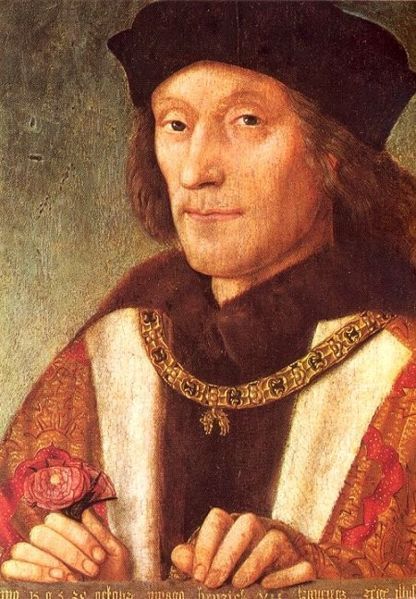
Henry VII, father of the sex-crazed, son finding Henry VIII. Born on January 28 1457, Henry VII was significant in a way that he was the very last of the English to claim his throne through battle. He was born at Pembroke Castle in the west of Wales. His parents were Edmund Tudor, the first Earl of Richmond and his mother Lady Margaret Beaufort. Sadly, his father died even before Henry VII was born. So in place of him was his Uncle Jasper who raised him. The battle in which he won was the War of Roses or more commonly known as the Battle on Bosworth Field. It was held on August 22, 1485.  The War of Roses was a fight between two houses in England. Henry belonged to the House of Lancaster and Richard III sided with the House of York. The House of Lancaster was represented by the red rose, and the House of Lancaster were represented by the white rose. On the battlefield, Richard III died, and Henry VII of Lancaster succeeded the throne. Luckily, this was the last battle in which Henry had to fight. In Henry’s love life, he had romantically proposed to Elizabeth on Christmas Day at Rennes Cathedral. Ironically, in January 18, 1486, he married the beautiful Elizabeth of York. Since Elizabeth’s father After he married her, he combined both the Lancastrians and the Yorks. From then on, the two houses were then transformed into the Tudors. Respectively, he most likely came up with Tudor from his father’s last name. Henry VII had become the first Tudor king and the last English king to win the throne through battle.